
December 23, 2025 | Tuesday
“The support of the European Union through the current grant has a direct impact on strengthening our journalistic and institutional capacities. First, the funding enables us to employ new professionals and expand our editorial team, thereby increasing the quality, diversity, and analytical capacity of our work,” says Jeta Berisha from Habitat. As the first company in Kosovo fully oriented toward sustainability and climate technology, Habitat is one of the Kosovo beneficiaries of the EU-funded Support for Small Media in the Western Balkan’s small grants for media production, through which they founded Platforma360 as the “green media” outlet.
With an EU budget of 1.3 million EUR, SMS (Support for Small Media in the Western Balkans) is contributing towards support for media freedom, pluralism, and capacity building in the region. Implemented by Kosovo 2.0 in Kosovo, the project’s primary goal is to create an enabling environment and provide structural support for professional media. Its objective is also to strengthen the capacity of local media, media organisations, and journalists to exercise their right to freedom of expression, access information, and promote media pluralism.
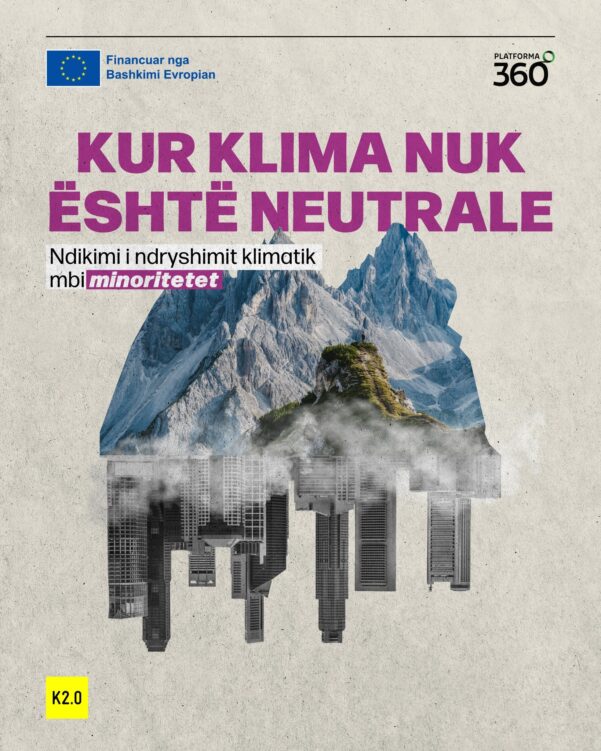
During the implementation of Habitat’s climate technology, the team observed a notable absence of Albanian-language information on environmental topics and green transition policies. The founding of Platforma 360 was a response to this gap, making it the country’s first green media outlet that aims to educate the public and raise awareness about climate change, professional terminology, and sustainable practices. Grounded in community values and a public-access approach to knowledge, the goal is for Platforma360 to remain a non-commercial initiative, reflecting Habitat’s institutional philosophy that environmental information should be accessible to all.
Highlighting resilience as an important element of such initiatives in their struggle to break through, Berisha concludes: “Our case demonstrates that the green transition is not only possible but also sustainable within Kosovo’s socio-economic reality. We started without initial capital, grants, or investments, relying instead on progressive operational principles, professional integrity, and continuous community engagement. Our results show that the public is interested in and willing to embrace new approaches that challenge conventional practices.”
Another beneficiary of the EU-funded SMS is the Klokot/Kllokot-based Smart Media. Led by its editor Fatos Hetemi, the Smart Media’s project Equal Voices, Bilingual Investigative Reporting for the Serb-majority Municipality of Klokot/Kllokot, focuses on strengthening investigative journalism and interethnic coexistence in the municipalities of Viti/Vitina and Klokot/Kllokot.
The project responds to long-standing challenges in the Serb-majority municipality of Klokot/Kllokot, including limited institutional transparency, linguistic barriers between communities, and the absence of critical reporting on local governance.
A key component of the project is the planned employment and training of a journalist from the Kosovo Serb community, who will be integrated into Smart Media’s newsroom. Responding to a lack of content production in Serbian language before receiving the grant, the EU-funded intervention seeks to address a need for accessible information for the Serbian-speaking community in Klokot/Kllokot. While political pressure has so far made recruitment challenging, Hetemi remains confident that a qualified professional will join the team, further reinforcing bilingual reporting and trust-building between communities.
Reflecting on the impact of the grant, Hetemi says that the “EU support has been essential not only for strengthening journalistic capacities, but also for improving Smart Media’s overall institutional functioning. In addition to expanding human resources and improving reporting quality, the financial support has enabled us to develop a bilingual technical infrastructure, significantly increasing public reach.”
Through initiatives such as SMS, the EU continues to demonstrate that targeted support can help local media overcome structural barriers, promote transparency, and meaningfully contribute to informed and democratic societies.