
December 3, 2025 | Wednesday
Financed by the European Union and implemented by the University of Pristina in partnership with the University of Milan, University of Parma, and King’s College London, the NanoKos project has marked an important step in advancing Kosovo’s research and scientific capacities in the field of nanotechnology, nanomedicine, and environmental health.
Representing one of the most ambitious EU-funded initiatives in the field of scientific research, the project’s aim was to strengthen the laboratory infrastructure in the University of Pristina, capacity building for the faculty and students through international mobilities, as well as to create a sustainable cooperation network between European research institutions and those in Kosovo.
Laboratory of Applied Medicine and Nanobiological Research
The establishment of the Laboratory of Applied Medicine and Nanobiological Research is one of the most tangible and meaningful results of NanoKos. It is the first laboratory of its kind in Kosovo, equipped with the most advanced technology for nanoparticle characterisation and biomedical research.
Its research focus lies on nanomedicine and the environment. The aim of the lab’s research on nanomedicine is the improvement of public health in Kosovo’s general population through preventive care, improvement in diagnosis, therapeutic treatments, as well as the development and use of new medical technologies. On the other hand, their research on the environment aims to come up with solutions to one of Kosovo’s most significant environmental health risks, by utilising research-based knowledge to come up with strategies to reduce the use of fossil fuels, invest in renewable energy sources, improve energy efficiency, promote public transportation and plant trees.
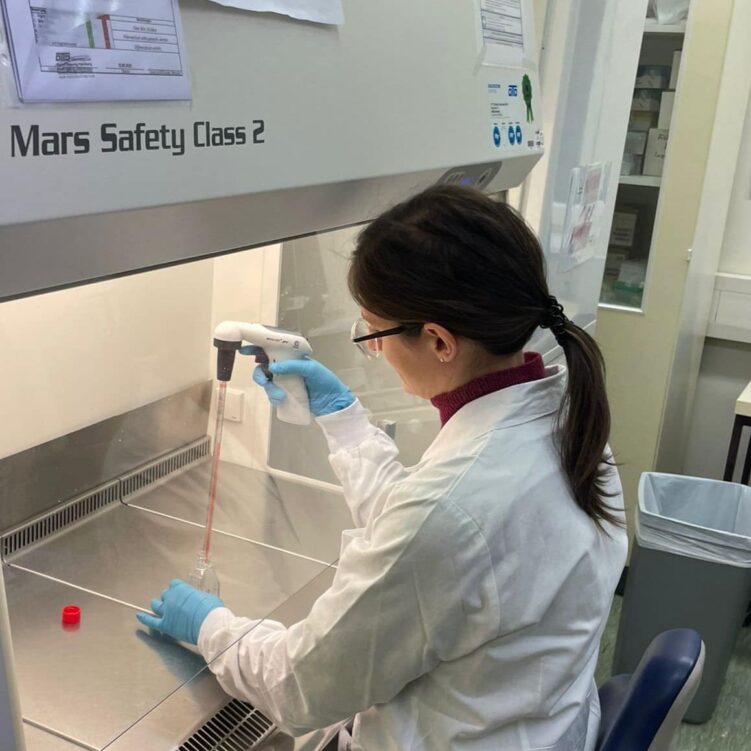
Mobilities that Brought Knowledge and New Opportunities
Thanks to EU support, 34 young researchers and 40 academic and administrative staff of the University of Pristina benefited from mobility opportunities to partner universities.
After completing his research placement at the University of Parma, Dr. Liridon Sopaj, one of the mobility beneficiaries, got a scholarship for advanced studies at the Max Delbrück Centre in Berlin. On the other hand, after her placement at the University of Milan, Dr. Hygeta Berisha was accepted into the PhD program at the same institution. These stories demonstrate the concrete impact that EU support has had on individual careers and on building a new generation of Kosovar scientists.
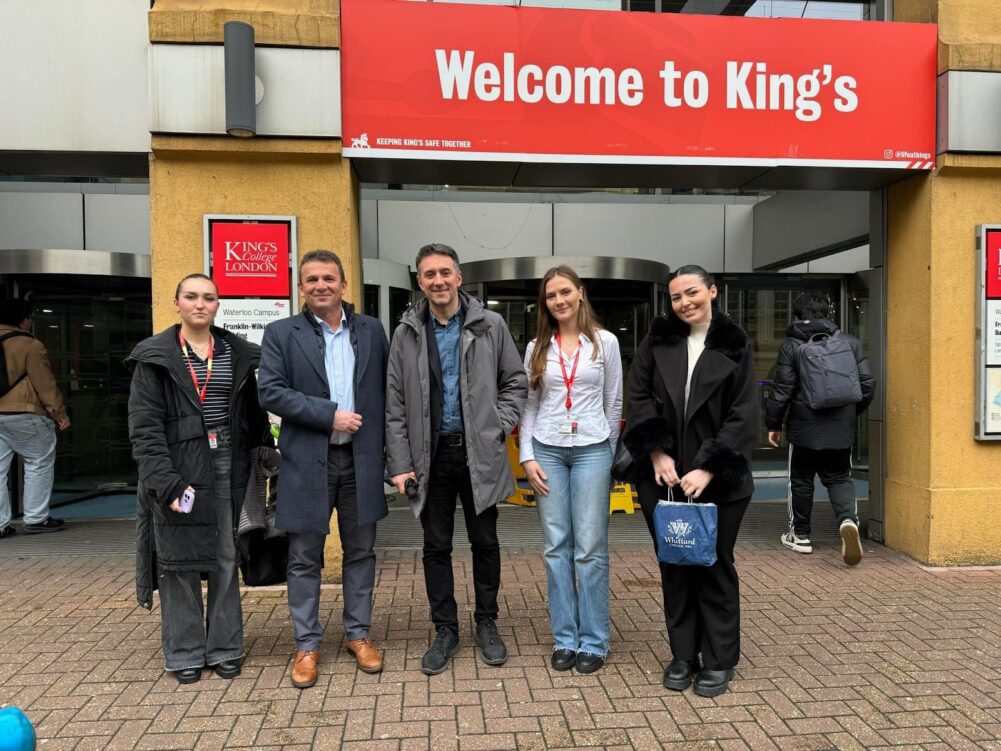
NanoKos has strengthened ties between Kosovo universities and European ones, supporting the transfer of knowledge, laboratory practices, and advanced research methodologies. For the first time, public universities in Kosovo have had the opportunity to apply to competitive open calls for research grants in nanomedicine, fostering a new culture of innovation and merit.
The project has also supported a public awareness campaign on air pollution caused by nanoparticles, involving students, teachers, and the general public in educational and awareness-raising activities across the country.
In addition, NanoKos has participated in a series of international conferences, including NanoBalkan 2024 in Tirana, where it hosted a dedicated workshop on nanotechnology and environmental research in Kosovo. Currently, the project is advancing with the preparation of several scientific publications that will present the research findings achieved within the framework of international collaboration.
After more than two years of work, NanoKos has created a lasting legacy: a modern laboratory that will serve future generations of researchers, staff trained according to European standards, and strong bridges of cooperation between Kosovo and EU research institutions.
The project has demonstrated that when vision, support, and commitment come together, science in small countries can also achieve results with great impact.