
December 9, 2025 | Tuesday
Marking Human Rights Day with Ms Hilmnijeta Apuk
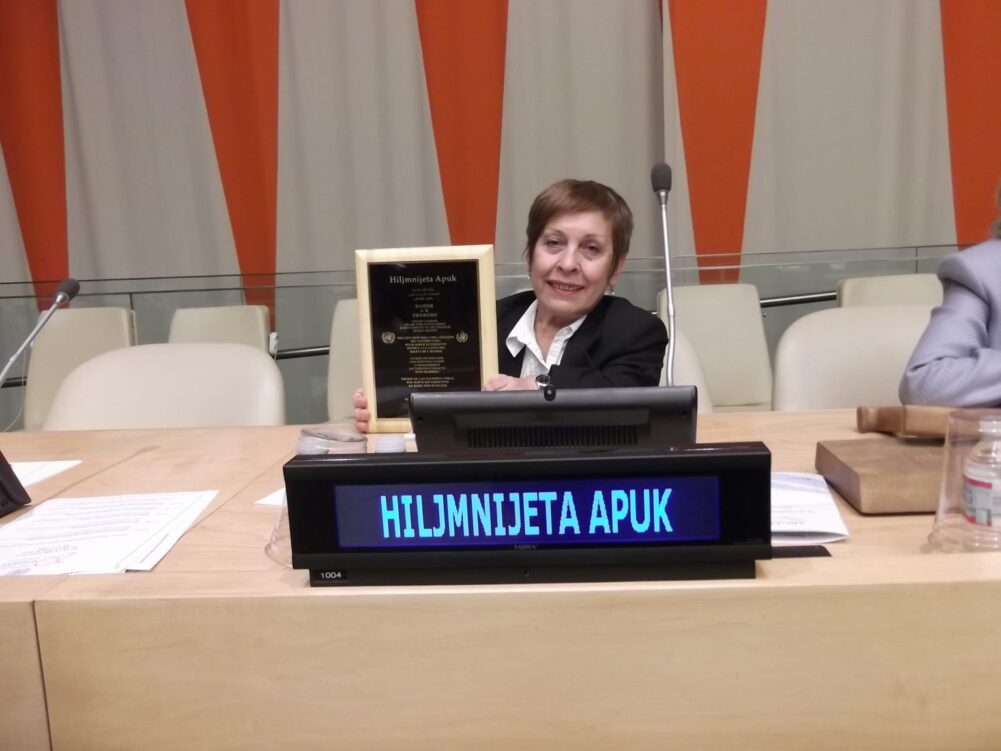
To mark International Human Rights Day, Europe House Kosovo sat down with Hiljmnijeta Apuk. Apuk is a pioneering activist and an awardee of the United Nations Prestige Award for Human Rights. Having broken personal barriers at a young age, she became one of the loudest voices advocating for human rights and reshaping global standards for equality. She has noted numerous times that human rights are not merely a legal matter, but a matter of human dignity, a journey rather than a destination. In this interview, she tells us about her personal journey and her reflections on the state of human rights in the world today.
Europe House Kosovo: Tell us a little about your personal journey, from childhood until today. How has your academic and professional development progressed?
Hiljmnijeta Apuk: My life journey began in humble circumstances and at a time when the rights of persons with disabilities were barely discussed. I was born with disproportionate restricted growth, which, from childhood, meant facing physical barriers, prejudices, and misunderstandings. However, thanks to the strong support of my family, especially the belief that education can change one’s life, my path was not one of limitations, but of opportunities.
I completed two university degrees, Economics and Law. I got two university degrees in two different fields because I wanted knowledge that would allow me to professionally and effectively advocate for human rights. At the age of 18, I obtained my driving license, at a time when almost no one expected this from a girl with a disability. When we could not find a solution to adapt the car, I designed it myself, and the engineers successfully implemented it technically. This taught me not to wait for change, but to create it.
I have devoted over three decades of my life to civil society, founding the organisation “Little People of Kosovo” and supporting those whose voices are least heard, especially girls and women in rural areas. My activism has gradually taken me to the international level.
I had the great honour of being selected by the UN General Assembly as a member of the UN Ad Hoc Committee, which drafted the Convention on the Rights of Persons with Disabilities. This is the first international legal document of the 21st century and the first legally binding global instrument on the rights of persons with disabilities. The Convention on the Rights of Persons with Disabilities is a document that countries around the world are obliged to implement. Being part of the team that wrote history for over a billion people worldwide is one of the greatest honours of my life.
For my long-term work, I had the privilege of receiving the United Nations Prestige Award for Human Rights, a recognition awarded only every five years to a small number of individuals who have contributed to advancing human rights globally, not just in their own country. This award is considered one of the highest UN recognitions and is often described as a step towards the Nobel Peace Prize.
My journey has not been easy. I grew up in the Balkans, where obstacles are numerous, and change comes slowly. However, I believe that a person, regardless of circumstances, with family support, knowledge, and perseverance, can build a path that not only changes their own life but also the lives of others. Today, I strive to show through my example that obstacles do not define a person; courage to overcome them and transform them into bridges for others does.
Europe House Kosovo: We are conducting this interview on the occasion of Human Rights Day. How do you perceive the state of human rights in the world today?
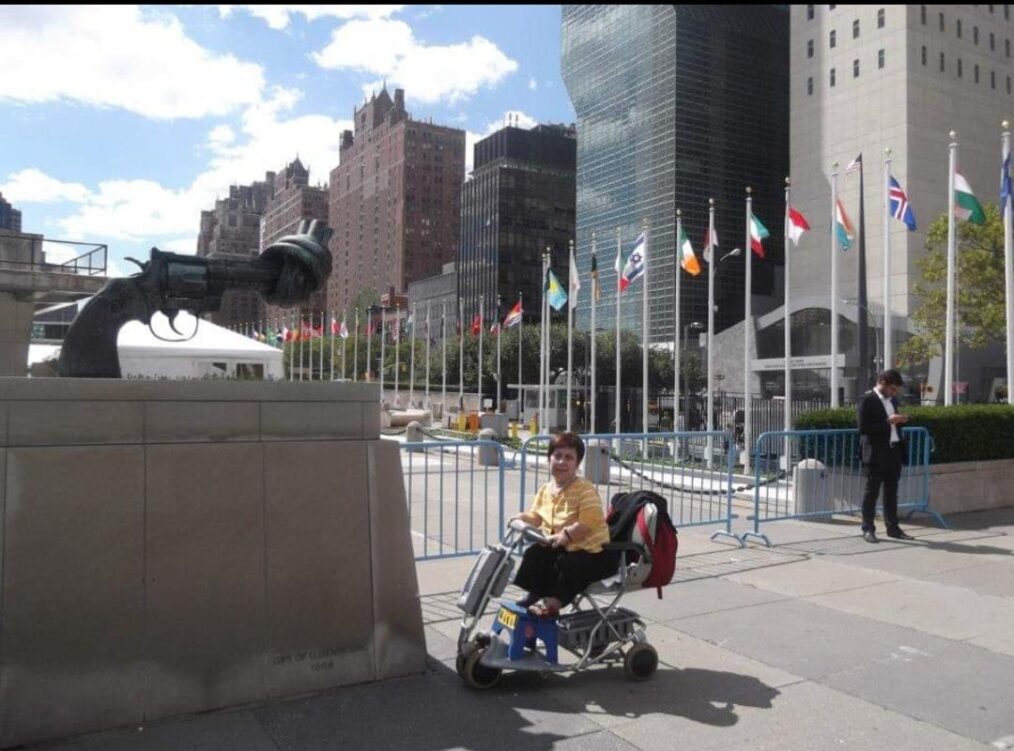
Hiljmnijeta Apuk: The current state of human rights in the world is complex and full of contradictions. On the one hand, international standards have never been more developed, and global awareness of human rights has never been stronger. On the other hand, contemporary challenges, armed conflicts, growing inequalities, violence against vulnerable groups, and limited access to institutions clearly show that human rights remain fragile and require constant protection.
I am particularly concerned about the position of those who are most often on the margins of society, such as persons with disabilities, women, children, and communities without a voice in political processes. Nevertheless, I believe there is room for optimism. We see increasing engagement from youth, the courage of activists worldwide, and the growing readiness of civil society to defend universal values and respond to rights violations.
Human Rights Day is an important reminder that rights are never guaranteed by themselves. Human rights materialise through daily responsibility, international cooperation, and the readiness of each individual to speak out when witnessing injustice. If we think globally and act locally, as one of the key UN messages says, we can build societies where the dignity of every person is not just an ideal but a reality.
Europe House Kosovo: For decades, you have been on the front line of advocating for the rights of persons with disabilities in Kosovo. What are the biggest achievements you could note today, and what are the gaps?
Hiljmnijeta Apuk: For decades, I have been at the forefront of advocating for the rights of persons with disabilities, and I can say that the achievements are significant. Today, persons with disabilities have greater visibility in society, civil society organisations represent them, and legal frameworks and institutional policies in many areas clearly recognise their rights. Increasingly, young persons with disabilities are active in education, culture, and public life, which is a sign of real progress.
However, challenges remain. Infrastructure and accessibility of public spaces are still insufficient, employment rates for persons with disabilities are low, and social awareness sometimes hinders true inclusion. Laws that exist but are not implemented do not change reality. The biggest task remains the continuous removal of barriers and fighting stereotypes so that the rights of persons with disabilities become an everyday practice, not just a formal provision.
Europe House Kosovo: In your own experience, has the Kosovo society progressed in its treatment of persons with disabilities? Do you see a significant improvement when it comes to accessibility, inclusivity, and respect towards the dignity of this category?
Hiljmnijeta Apuk: Kosovo society is undoubtedly changing. There is a noticeably greater understanding, solidarity, and willingness to see persons with disabilities as equal participants in society. Youth, in particular, show increased sensitivity and openness.
Yet, changing mentality is a slow process. Traditional attitudes, insufficient knowledge, and deeply rooted stereotypes remain a challenge. Although progress is visible, we have not yet reached a level where respect and inclusion become automatic standards. Continued education, dialogue, and public campaigns are needed to consolidate this change.
Europe House Kosovo: The UN Convention on the Rights of Persons with Disabilities is an important international instrument to protect the rights of persons with disabilities. Do you think there is a practical application of the convention’s standards in Kosovo?
Hiljmnijeta Apuk: The UN Convention on the Rights of Persons with Disabilities is a historic document. It is the first international legal instrument of the 21st century, obliging states to ensure full participation and equality for persons with disabilities. Kosovo has made important steps in its implementation, including legal reforms and strategic documents that follow the spirit of the Convention.
However, full implementation of the Convention’s standards requires stronger institutions, better cross-sector cooperation, and concrete policies that reach every citizen. Consistency, long-term planning, and continuous monitoring of law enforcement are essential. The Convention is a powerful tool, but only if applied in practice.
Europe House Kosovo: What are the biggest barriers still hindering the equal inclusion of persons with disabilities in Kosovo: laws, infrastructure, or social stereotypes?
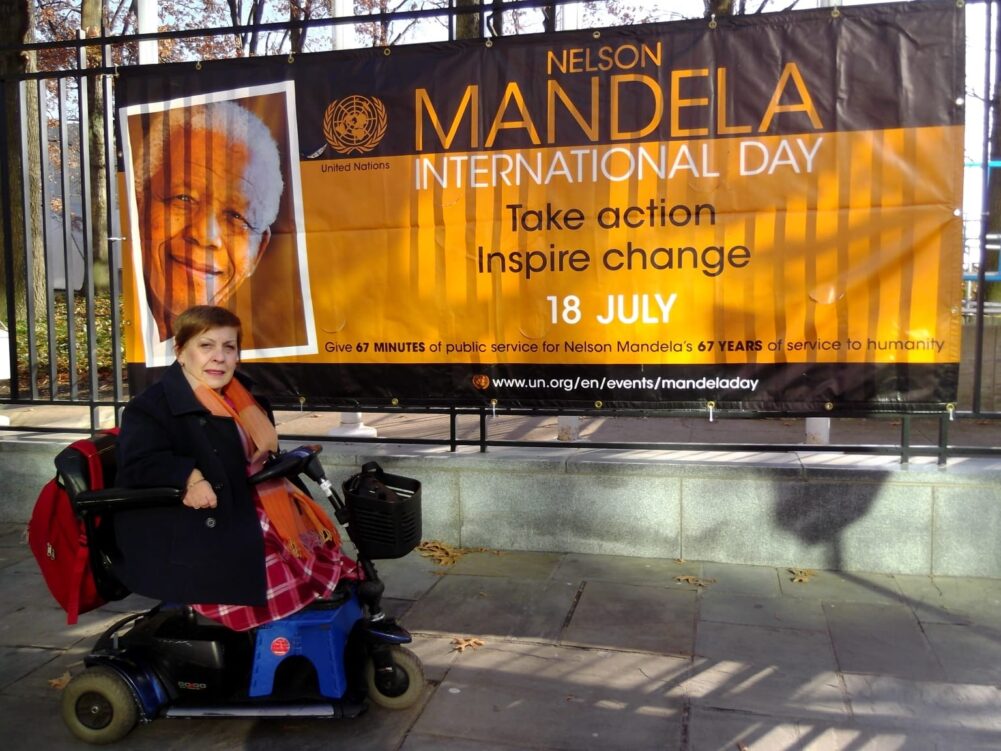
Hiljmnijeta Apuk: Barriers are multilayered and vary from legal to infrastructural and social. When we talk about legal barriers, laws exist, but their enforcement often faces a lack of financial and institutional capacity, whereas when it comes to infrastructural ones, many schools, health facilities, workplaces, and public spaces still remain inaccessible. The hardest to overcome are the social barriers that come because of stereotypes, affecting employment, education, social interaction, and community living opportunities.
The greatest barrier remains invisible; it is the assumption that persons with disabilities “cannot.” Changing this paradigm is key to true inclusion.
Europe House Kosovo: You have often said that human rights are not merely a legal matter, but a matter of human dignity. How can we educate the young generations in this spirit?
Hiljmnijeta Apuk: Education about human rights and respect for diversity should begin from the earliest age. Children in kindergartens learn through play, with dolls of different races and skin colours, dolls with disabilities, dolls in wheelchairs, or with assistive devices, which help children develop habits of respect and understanding of differences.
Later, in schools and communities, youth should learn through practical activities and joint projects, develop empathy, solidarity, and critical thinking; grow up in environments where respect for human dignity is a core value.
If we instil the habit of respecting every individual from an early age, we create generations that will build inclusive and fair societies, where diversity becomes natural and valued.
Europe House Kosovo: In what matters, according to your own experience, is it urgent that there is regional cooperation to ensure equality and accessibility for all?
Hiljmnijeta Apuk: The Balkans share a common history, challenges, and aspirations. Regional cooperation is essential, especially in exchanging experiences and good practices, joint campaigns against discrimination, developing regional accessibility standards, networking civil society organisations and joint youth initiatives.
Cooperation in human rights is not only a political necessity. It is an opportunity for the region to demonstrate that it can be a model of inclusion and solidarity.
Europe House Kosovo: How do you view the role of media and social media in the promotion or obstruction of the advancement of human rights?
Hiljmnijeta Apuk: Media and social networks have the power to change society, for better or worse. When responsible, they can raise awareness, empower marginalised communities, build a culture of respect and expose discrimination. However, they can sometimes spread stereotypes and misinformation, especially when sensationalism is valued over ethics. Professionalism, accuracy, and respect for human dignity are essential. When media operate correctly, they become a powerful ally in the fight for human rights.
Europe House Kosovo: You are an inspiration to many human rights activists. On this International Human Rights Day, what would be your message to citizens and institutions, but particularly to young persons who advocate for human rights?
Hiljmnijeta Apuk: On this day, I want to remind you that human rights are not protected only in institutions. Human rights are protected in everyday life, in our speech, actions, solidarity, and courage to act when we witness injustice. I call on citizens to believe in the power of their voice, institutions to consistently enforce the law, and the international community to remain a partner in building an inclusive society.
Human rights are universal and inalienable. It is our responsibility to protect them together.
I tell young people never to underestimate the power of their voice. Change does not happen overnight, but perseverance, integrity, and belief in justice make the difference. Activism is a marathon, not a 100-meter sprint. It requires patience, courage, and dedication.
I advise them to learn, connect, collaborate across borders, believe in their values, and never accept that obstacles are a reason to give up.
Every young activist is a potential champion of human rights in their community. It only takes one step of courage to begin that journey.