
December 23, 2025 | Tuesday
Mitrovicë/Mitrovica region has long carried the weight of division. “As someone who works daily at the intersection of justice, dialogue and community trust, I see both the challenges and the quiet strength that exists on all sides,” says Jelena Ilić, the representative of Alternative Dispute Resolution Center (ADRC). The European Union-funded Harmony Talks 2.0 project, implemented by the ADRC in partnership with Reconciliation Empowering Communities, aims to further cultivate that strength. This time not as a one-off initiative, but as a growing, shared practice.
Harmony Talks 2.0 builds on the experience of the first phase of this EU-funded project and moves a step further focusing no longer only on exchange, but on creating lasting dialogue spaces, equipping young people with conflict resolution skills and embedding reconciliation into schools, universities and community life.
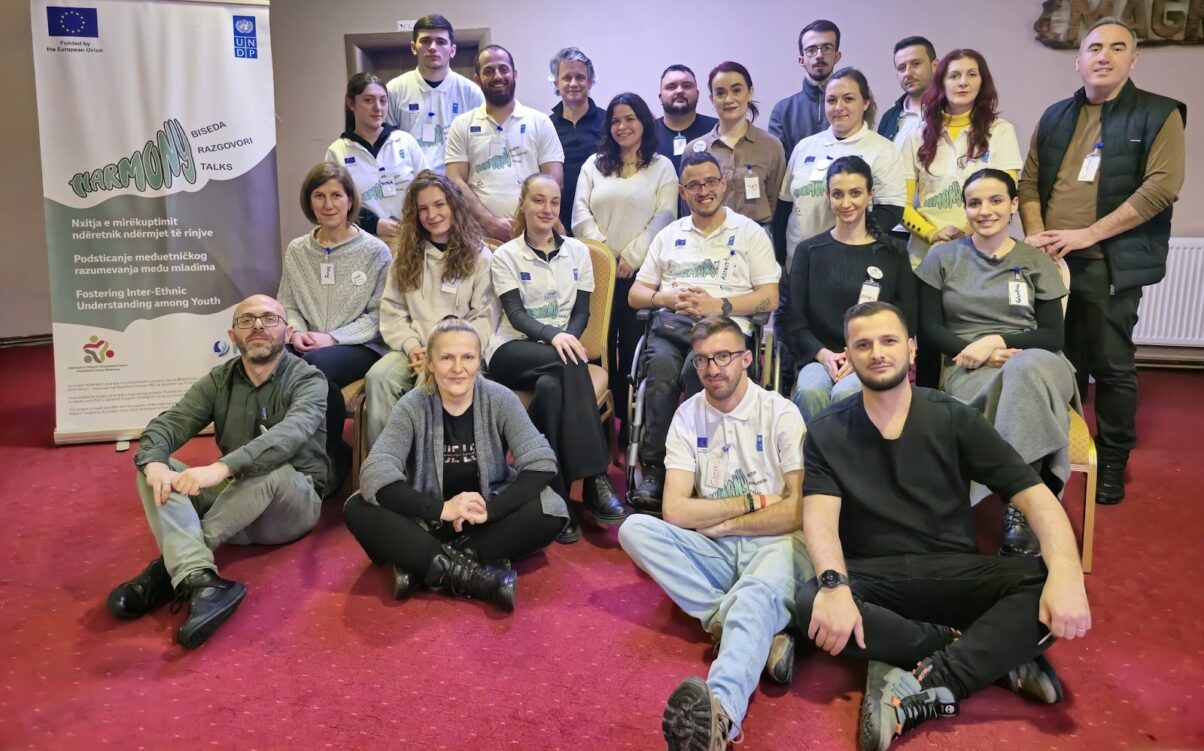
Community Dialogue Forums – of which two have already taken place – are a key pillar of the Harmony Talks project, bringing together representatives of local institutions, civil society, youth and community groups in Mitrovica South and Mitrovica North.
The first forum took place at Europe House Mitrovica North under the topic Shared Public Spaces: Community Collaboration and Volunteering that Matters. The discussion moved quickly from theory to the real-life practices. Participants spoke openly about parks, schools, sports fields and neighbourhoods as shared spaces that unite communities.
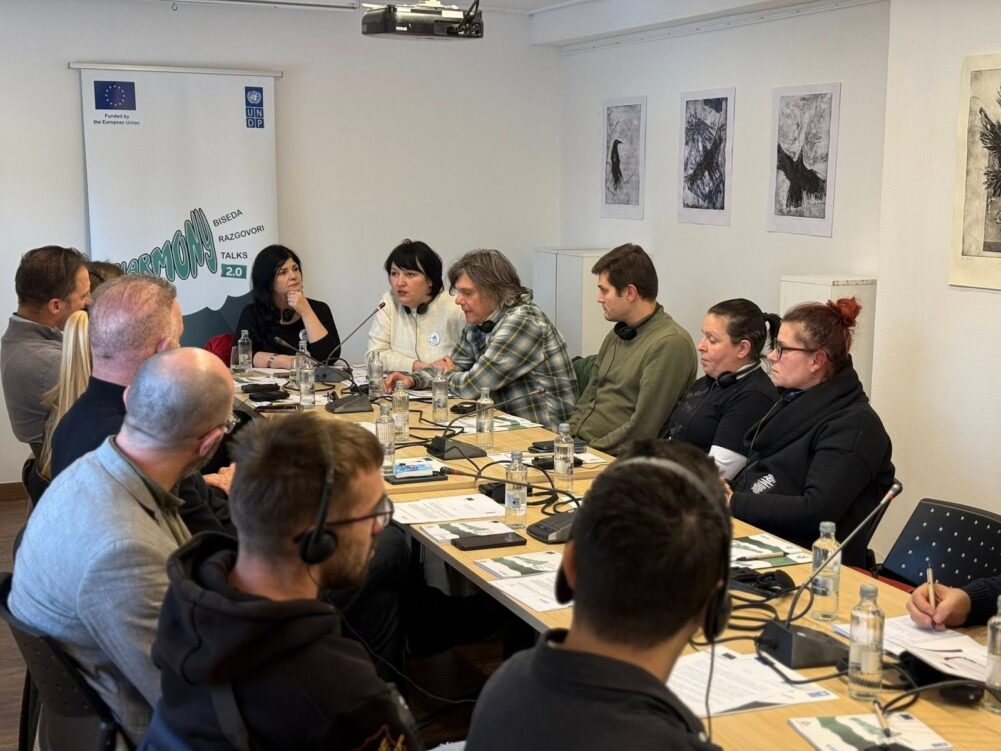
Culture and Sports as Bridges: Learning and Cooperation was the topic in the second forum organised at Europe House Mitrovica North with reflections that showed that different forms of cultural expressions: music, art and sports offer a language of cooperation, especially for young people who may otherwise hesitate to engage in formal dialogue. What was a clear message of the forum was that when young people meet on the field, on stage or in workshops, barriers soften quickly and language and ethnicity no longer matter when the goal is greater and serves the city and the wider community.
Linking dialogue to practice is the Harmony Talks 2.0’s strongest point. Beyond mere symbolism, each of these forums is designed to lead towards small joint actions and longer-term cooperation. Harmony Talks 2.0 provides a space for communities to meet, express concerns, confront ideas and explore possible solutions for the common good. And when people meet in trusted spaces, they feel responsible to initiate concrete actions for long-term reconciliation and inter-ethnic cooperation.
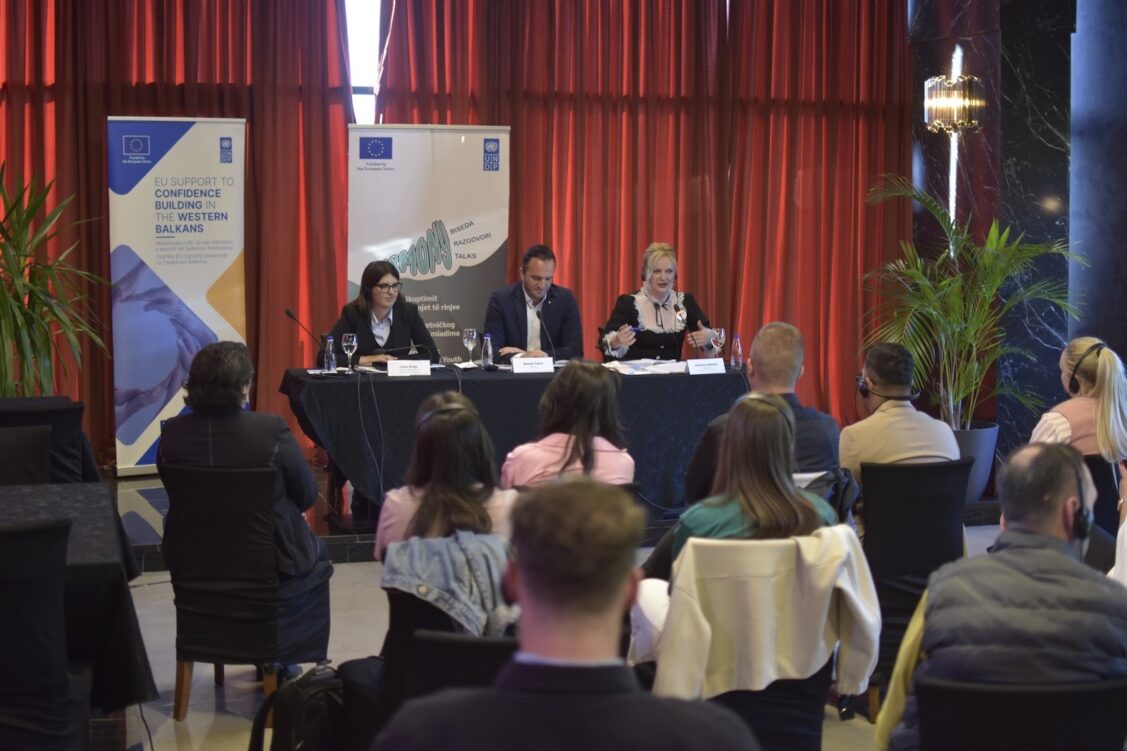
Through Harmony Talks 2.0, the “simple yet demanding mission of ADRC,” as Ilić puts it, “to facilitate communication, mutual understanding, and fair solution” becomes visible in concrete ways. Young participants begin to see conflict not as a wall, but as a process that can be managed. Local institutions become more open to inter-ethnic cooperation. Schools and youth centres gain tools to continue dialogue beyond the project. In one case, two youth groups that met during the second forum have already started planning a joint cultural event. These are small steps, but they carry real weight.
“For ADRC, Harmony Talks 2.0 is also a reminder that reconciliation is not built through documents alone, but through repeated, honest encounters,” adds Ilić. The support of the European Union makes it possible to create these encounters in a structured, safe and sustainable way.