
January 28, 2026 | Wednesday
Interview with Prof. Arbnor Pajaziti
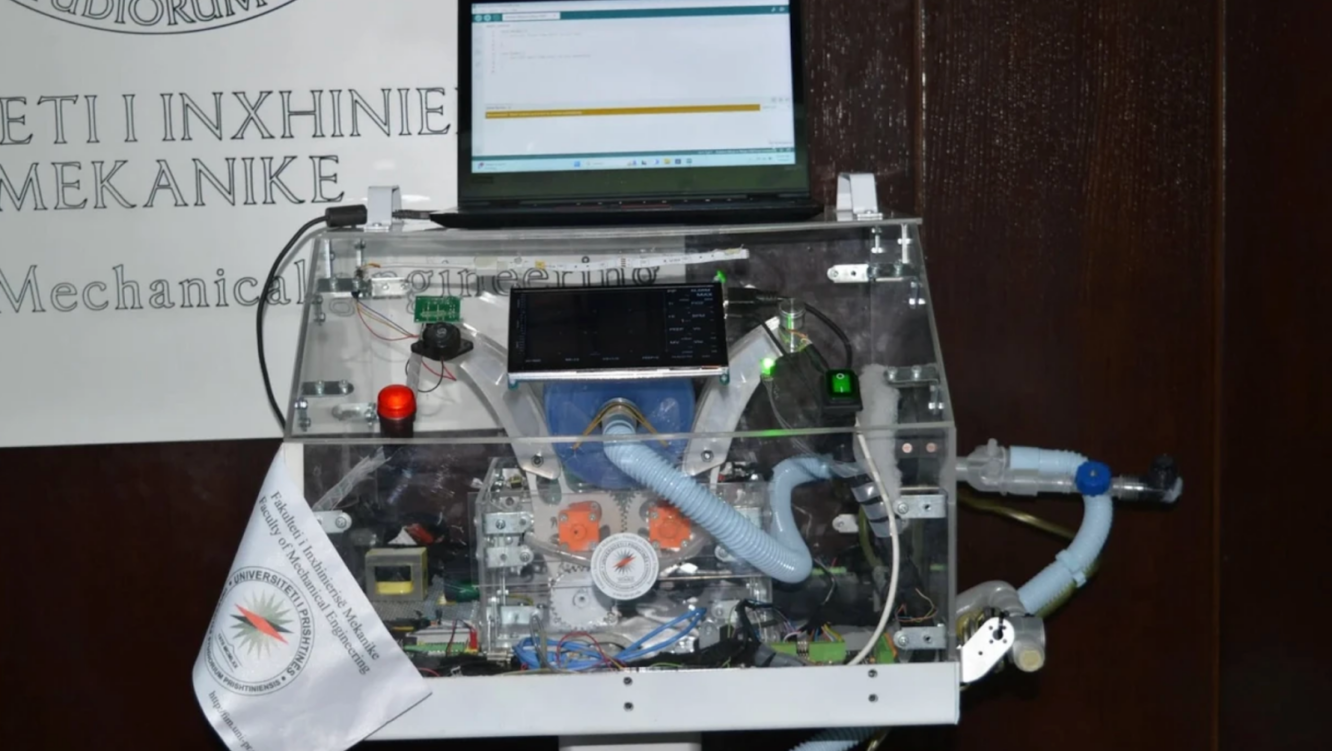
Prof.Dr. Arbnor Pajaziti is an engineer and full professor at the Faculty of Engineering, Department of Mechanical Engineering at the University of Pristina, as well as an award-winning researcher. At the time of the global health crisis that came with the spread of the COVID-19 virus, he, along with colleagues and students and with the support of the European Union, through the EU4TECH project, embarked on inventing the “mechanical ventilator with resilient adjustment linkage”, which has recently been patented and recognized officially. Europe House Kosovo spoke with Prof. Dr. Pajaziti about the importance of the device, the process of its invention in general and the importance of turning academic research into concrete solutions that directly improve the well-being of people and society.
Europe House Kosovo: Professor Pajaziti, how would you describe your professional journey and what has motivated you to remain active in scientific research and innovation?
Arbnor Pajaziti: My professional journey has been closely linked to the Faculty of Mechanical Engineering at the University of Pristina, as well as to my commitment to scientific research in the fields of mechatronics, robotics, and technical innovation. What has constantly motivated me is the sense of responsibility to contribute with useful solutions to the society, especially in challenging situations like the COVID-19 pandemic. I strongly believe that the University should be an engine of technological development, which is why I have endeavoured to turn research ideas into concrete results, like in the case of the mechanical ventilator patent.
Europe House Kosovo: How important is it to you that academic work has a real, practical impact on society and people’s lives?
Arbnor Pajaziti: For me, academic work only takes on full value when it turns into a real contribution to the society. The goal of scientific research is not to remain in the laboratory, but to impact people’s lives – either through new technologies or practical solutions that improve services for the needs of humanity. Innovations like the mechanical ventilator with resilient adjustment linkage are examples of how academic ideas can turn into useful device that serve the community, especially in times of crisis.
Europe House Kosovo: How do you see the role of public universities in promoting innovative ideas in Kosovo?
Arbnor Pajaziti: The public university has a pivotal role in fostering innovation in Kosovo. It should be the hub where new ideas are born, where academic staff and students are supported to turn research concepts into practical solutions, through laboratories, applied projects and collaborations with the industry. The public university can create a sustainable innovation ecosystem. The mechanical ventilator patent is a concrete example of how university’s in-house potential can be materialized into achievements that serve the country.
Europe House Kosovo: The development of the mechanical ventilator was supported by the European Union, through the EU4TECH project, and the University of Pristina. How do you see the importance of the EU financial support for academic research at the University?
Arbnor Pajaziti: Financial support from the University of Pristina and the European Union is crucial to academic research at the university. It helps turn ideas into concrete projects, equipped with the necessary resources for development and testing. Moreover, this support increases international cooperation, strengthens our research capacities and shows that Kosovar universities can be part of global innovation network.
Europe House Kosovo: The idea for building a mechanical ventilator came about during the COVID-19 pandemic. What incentivised you to turn an urgent need into a concrete project?
Arbnor Pajaziti: The COVID-19 pandemic was a challenging period for everyone, especially for the healthcare system. The global shortage of ventilation equipment created an urgent need for new solutions. As an engineer and professor, I felt it professionally and morally incumbent upon me to contribute with what I knew best: the development of a functional device, simple to manufacture and reliable to use. This situation prompted me to turn the idea into a concrete project immediately, by working intensively with professors, assistants and students to realize the concept into a complete prototype, and then into a patented innovation.
Europe House Kosovo: What is the specific function and impact of the device in practice?
Arbnor Pajaziti: The mechanical ventilator with resilient adjustment linkage is designed to provide controlled breathing for patients who cannot breathe on their own. The resilient adjustment system enables the device to adjust ventilation parameters in real time, increasing operational safety and efficiency. In practice, this means a more reliable device, easier to manufacture and potentially more affordable for healthcare institutions, especially in emergency situations or in places with limited resources.
Europe House Kosovo: What does it mean to you that this project was developed in the laboratories of the University of Pristina, in direct collaboration with students?
Arbnor Pajaziti: The fact that this project was developed in the laboratories of the University of Pristina, together with my colleagues and students, has a special meaning for me. It shows that our university has real potential to produce innovative solutions and that students, when directly involved in practical projects, can become co-creators of knowledge. This close collaboration is the greatest value of the project, because it proves that innovation can arise even in modest conditions, when there is dedication, vision and teamwork.
Europe House Kosovo: How important is professor-student collaboration in creating solutions that go beyond university walls?
Arbnor Pajaziti: Professor-student collaboration is key to creating solutions that go beyond university walls. When academic experience is combined with students’ energy and creativity, the ideas that arise can turn into real products, useful for the industry and society. This collaboration not only prepares students for the challenges of the profession, but also strengthens the role of the university as a source of innovation and development.
Europe House Kosovo: The device has been patented and recognized officially. What does this achievement symbolize for you?
Arbnor Pajaziti: The official recognition of the patent symbolizes for me the appreciation of the research and innovative work that I have done. It is proof that a born idea can turn into a concrete and beneficial solution for the society. Furthermore, this achievement reflects the professional and scientific scale of the Faculty of Mechanical Engineering and shows that our work has a tangible impact on the development of engineering and industry in Kosovo.
Europe House Kosovo: Do you think that patenting academic inventions could change the way we view the role of the university in society and industry?
Arbnor Pajaziti: Patenting academic inventions positions the university as an active stakeholder in innovation and economic growth, showing that academic work is not merely a theory, but can be turned into concrete solutions to real challenges. This process fosters collaboration with industry, increases technological capacities and inspires academic staff and students to be part of country’s creativity and transformation.
Europe House Kosovo: What message does this project convey to young people studying engineering or similar fields?
Arbnor Pajaziti: This project shows that different ideas can turn into real solutions with a positive impact on the society. For young people studying engineering, the message is to be curious, work with passion and not underestimate the power of collaboration with professors and colleagues. Innovation is not only born in books, but also when expertise, creativity and commitment unite to address real needs.
Europe House Kosovo: What is Kosovo’s potential to develop technological devices and solutions that can serve beyond its borders?
Arbnor Pajaziti: Kosovo has great potential to develop technological devices and solutions that can serve beyond borders. Universities, research laboratories and young talent create an environment where innovation can emerge and materialize into concrete products. Projects like the mechanical ventilator prototype show that even with limited resources, results that are also valued internationally can be achieved, increasing our capacity to contribute to global technology and industry.
Europe House Kosovo: How do you see the future of cooperation between education and scientific research and its alignment with the real needs of society?
Arbnor Pajaziti: Cooperation between education, scientific research and its alignment with the real needs of society in the future is crucial to the development of our country. When universities engage in projects that tackle specific challenges, academics and students become part of practical solutions, and industry and community benefit from the outcomes. Through this close collaboration, we can build an innovation ecosystem where scientific knowledge translates into products and services that contribute directly to the improvement of people’s lives.