
September 10, 2025 | Wednesday
An interview with the artists.
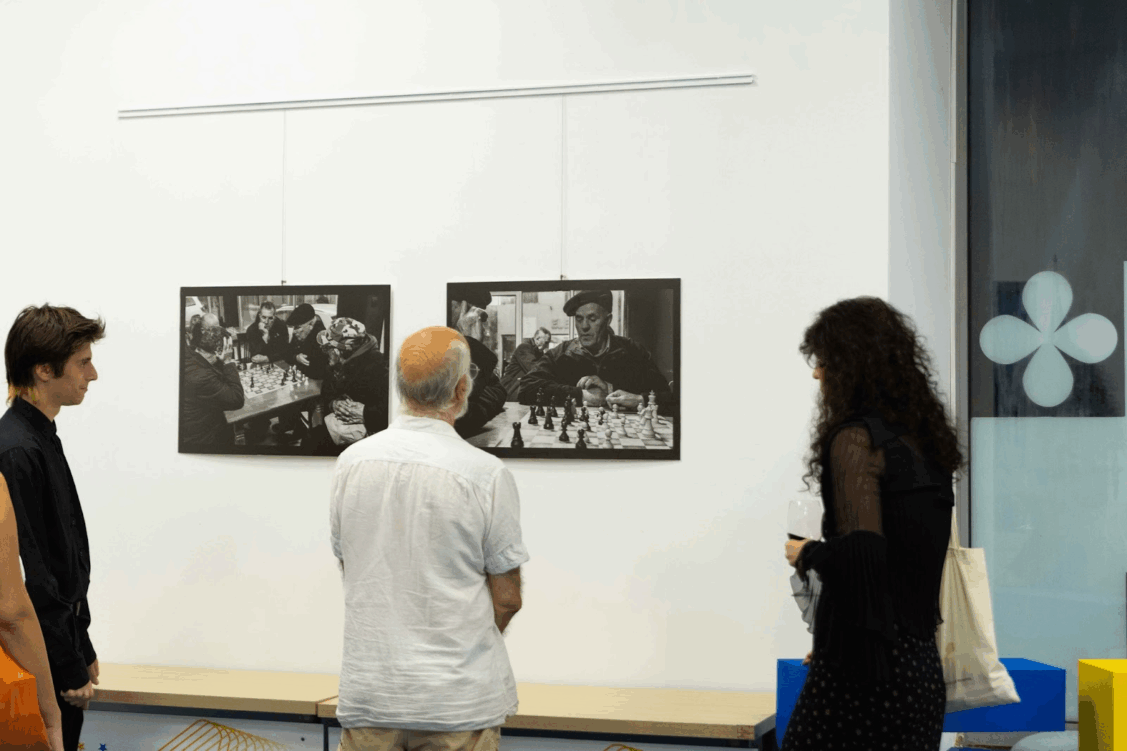
Two young photographers, Festa Ramoja and Lum Hajrullahu, came together in a unique exhibition that opened at Europe House Pristina on August 20, 2025.
Titled The Lens of Youth, the exhibition brings together their distinct visual voices, each exploring the raw immediacy of perception in early life. Through different subjects and atmospheres, their photography reveals how they sharpen emotion, deepen contrasts, and frame the world in ways both intimate and vast.
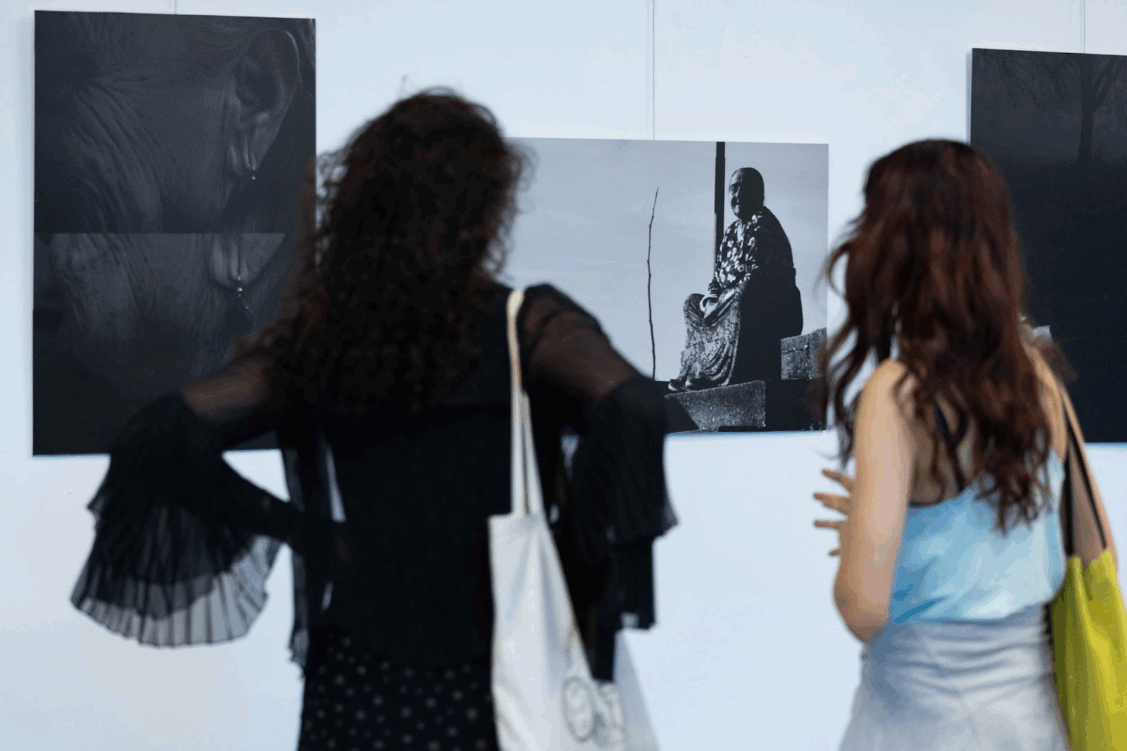
Together, these photographs speak to the duality of youthful vision: one is close, human, and tactile; the other is distant, spectral, and vast. Both remind us that the lens of youth is defined by the intensity with which the world is felt—whether in the immediacy of touch or the quiet contemplation of what lies beyond the visible.
We spoke to both artists, to learn more about their practice, how they see photography today and what moves their pulse to document in the form of photography.
Read the interviews below.
“My photography is how I see the world”
Interview with Festa Ramoja
Europe House Kosovo: How did it feel to present your work side by side with another artist in this joint exhibition? How does your work dialogue with your colleague’s work?
Festa Ramoja: By looking at our works side by side, a beautiful dialogue between our styles is created, I think this gives even more beauty to both works!
Europe House Kosovo: When you look at each other’s photographs, where do you notice similarities or differences in the way you both capture the world? What impresses you, that you feel must be captured and documented through photography? How does looking at your work in juxtapose with the work of another photograph, make you reflect on your own photography?
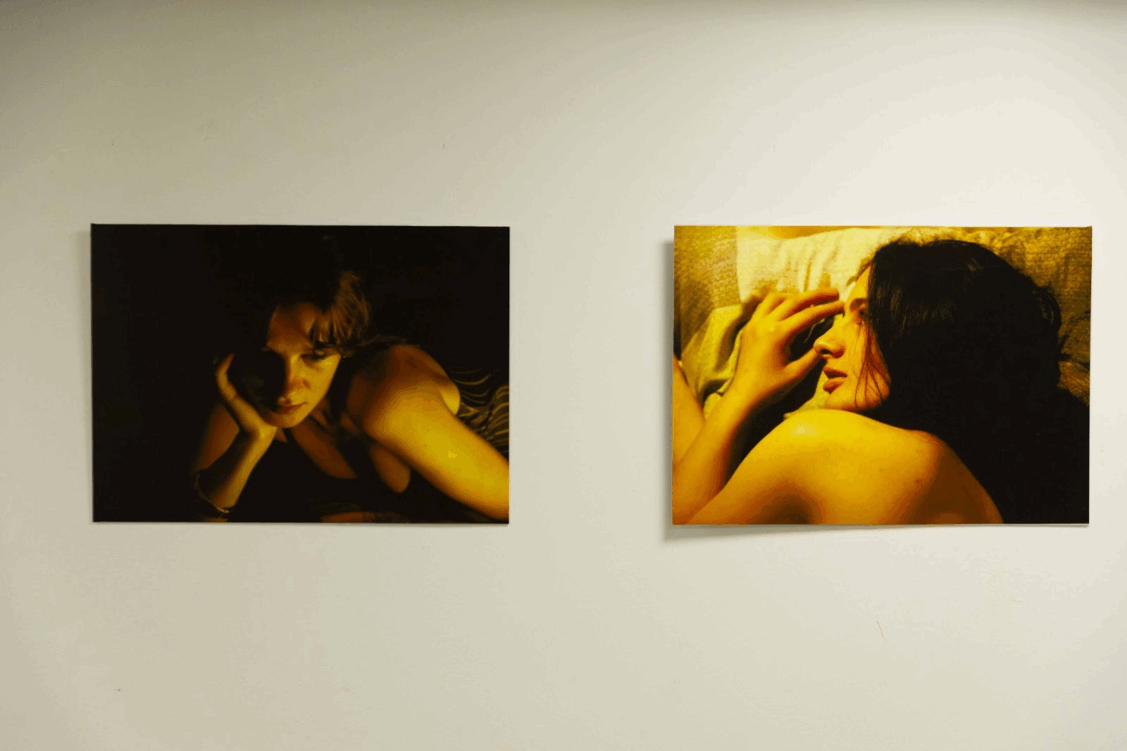
Festa Ramoja: Lumi has a very documentary and emotional style, his photos capture people, streets, and real moments of life. My photos perhaps have more colors, light-shadows, intimate moments of people, somewhere between nature and intimate sensitivity. Placing our works together creates an interesting contrast, and makes me reflect a lot on my way of telling stories.
Europe House Kosovo: What usually sparks your impulse to press the shutter, what kinds of moments or details make your pulse quicken as a photographer?
Festa Ramoja: Usually they are small, intimate details of people, a light, age on the skin, a fleeting expression or a quiet moment of my people… in a certain way a person is placed in relation with time, the body, and solitude.
Europe House Kosovo: How would you describe your personal approach to photography, do you see it more as documenting reality, or as a form of personal expression?
Festa Ramoja: My photography is more a personal expression of how I see the world.
Europe House Kosovo: What role does photography play in your everyday life and in the way you understand yourself and the society around you? Does it make you a more intentional observer?
Festa Ramoja: Photography helps me to slow down, to see more things and to understand. It has become a way to understand myself and the people around me.
Europe House Kosovo: As young artists, how do you experience the challenges and opportunities of working with photography today?
Festa Ramoja: It is difficult to gain attention and resources, but also emotional in the moment when you create connections with others.
Europe House Kosovo: Do you feel that the rapid growth of technology – smartphones, AI tools, social media – threatens or enriches the value of photography as art?
Festa Ramoja: I think it is a challenge and requires a lot of effort to stand out as an artist.
Europe House Kosovo: What does it mean for you to be a young photographer in Kosovo right now, what are the unique struggles and inspirations that shape your path?
Festa Ramoja: It is very important to me because I am capturing a place and culture that is changing, with challenges but which inspires me even more to share my perspective.
“To be a good photographer, you need to be one with what you’re capturing, become part of it”
Interview with Lum Hajrullahu
Europe House Kosovo: How did it feel to present your work side by side with another artist in this joint exhibition? How does your work dialogue with your colleague’s work?
Lum Hajrullahu: It feels great, especially when you already know who you’re exhibiting with. I know Festa from the Faculty of Arts, and since we both share the same interest in photography, it made the collaboration feel natural and easy. I’ve never felt there was any issue with dialogue between our works. Even in this exhibition, the process has been smooth and inspiring.
Europe House Kosovo: When you look at each other’s photographs, where do you notice similarities or differences in the way you both capture the world? What impresses you, that you feel must be captured and documented through photography? How does looking at your work in juxtapose with the work of another photograph, make you reflect on your own photography?
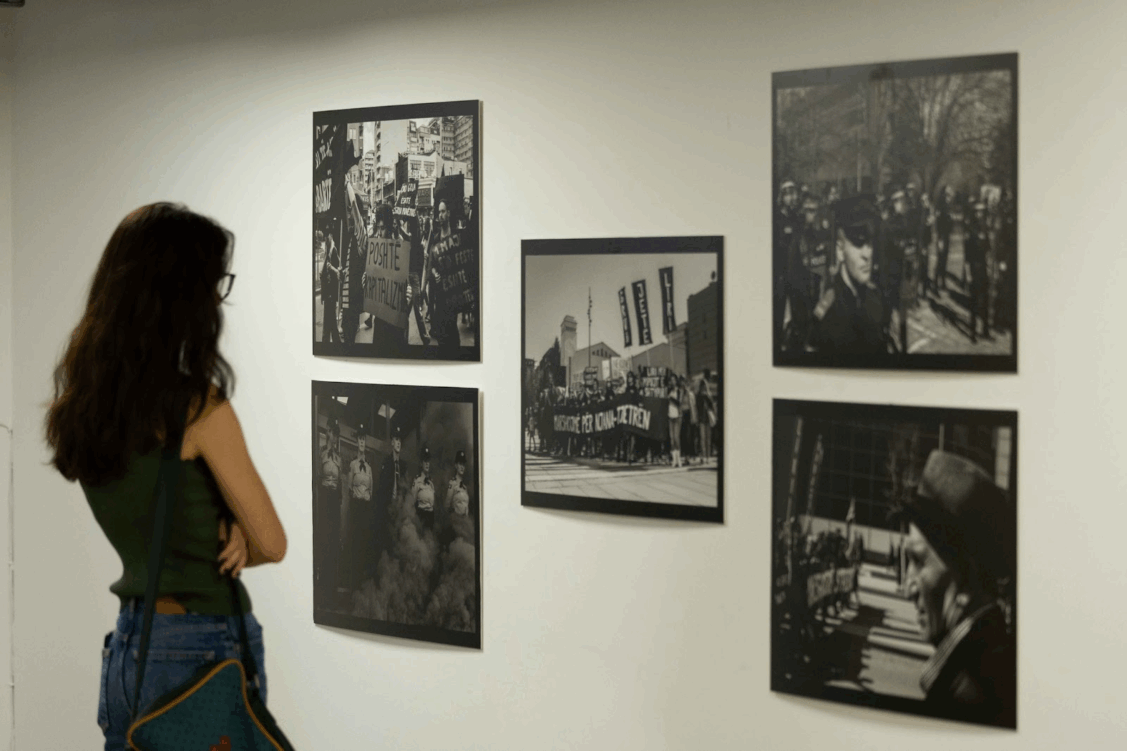
Lum Hajrullahu: Even though we are both photographers working in the same medium, our approaches are very different. I tend to work mostly in black and white, giving my images a sense of nostalgia. People often ask me if I’ve used an analog camera, and that’s exactly what I love, that I can create photographs in a modern setting but still give them that timeless feel.
On the other hand, whenever I see Festa’s photographs, they remind me of the beauty of color photography. They make me reflect more critically on my own work. It pushes me to see photography differently, and I really appreciate that dynamic between us.
Europe House Kosovo: What usually sparks your impulse to press the shutter, what kinds of moments or details make your pulse quicken as a photographer?
Lum Hajrullahu: For me, it’s chaos, what I’d call organized chaos. Whenever I see it through my lens, I feel an immediate urge to press the shutter. Often in photography, people try to capture only beauty while ignoring chaos, or they look at it with pity. I do the opposite: I want to capture its rawness.
I think this comes from growing up in a chaotic environment and city. I’ve often seen photographers try to portray Prishtina as something it isn’t, turning a blind eye to what they call the “ugly” side. Personally, I don’t find it ugly at all; I find beauty within it. As the saying goes, you shouldn’t judge a book by its cover.
Europe House Kosovo: How would you describe your personal approach to photography, do you see it more as documenting reality, or as a form of personal expression?
Lum Hajrullahu: I see it as both, documenting reality while also expressing myself. Photography, to me, is one of the best mediums for self-expression because it allows you to take something from your surroundings and turn it into something personal. That balance between reality and expression is what I find most fascinating.
Europe House Kosovo: What role does photography play in your everyday life and in the way you understand yourself and the society around you? Does it make you a more intentional observer?
Lum Hajrullahu: To be a good photographer, I think you need to be one with what you’re capturing, become part of it, not just an outsider. That’s always been important to me.
Through photography, I’ve gained a deeper understanding of the people I document. Often, I stop and talk to them. For example, one series I did was of Roma children at the Peja train station. I hadn’t planned on meeting them, I was only there to photograph the station. But by chance, I ended up talking with them and learning about their struggles. That moment really changed my perspective on photography.
Europe House Kosovo: As young artists, how do you experience the challenges and opportunities of working with photography today?
Lum Hajrullahu: Of course, photography has its challenges, even though it might seem simple because it’s so accessible today. There are challenges tied to the environments we choose to photograph. For me, protests are always a challenge. I’ve been photographing them since I was 14, and while they’ve always attracted me, the tension that comes with them can be overwhelming.
Another major challenge has been space, having a place to create and explore. I’ve been lucky to have Termokiss as a space to work, but I know many young photographers don’t have that opportunity until university.
As for opportunities, photography itself is one. It always opens doors, creates possibilities, and allows you to take your work in different directions.
Europe House Kosovo: Do you feel that the rapid growth of technology – smartphones, AI tools, social media – threatens or enriches the value of photography as art?
Lum Hajrullahu: In some ways, it enriches photography, but in other ways, it threatens it.
Smartphones are a good thing because they make photography accessible to everyone. Anyone can start as a photographer with just a phone, and maybe later move on to a camera.
But AI is a threat. It endangers photography in the same way it endangers other forms of art, mainly because of how photographs are used to generate AI images. In many cases, it feels like a form of plagiarism.
Europe House Kosovo: What does it mean for you to be a young photographer in Kosovo right now, what are the unique struggles and inspirations that shape your path?
Lum Hajrullahu: As we say in Kosovo, n’ lule të rinisë (in the flower of youth), it feels wonderful. Growing at the same time as your country and having the chance to document it, the good, the bad, and the ugly, is truly inspiring.
But it also comes with struggles. Living in a country with ongoing socio-economic difficulties makes it hard to pursue this field. Often, you’re forced to choose between being a documentary photographer or working a 9-to-5 job. That limits your artistic freedom and creation, because you no longer have the time to do what you love. Unfortunately, that’s the reality.